Where to Buy BPC-157 and TB-500
If you have been in this space for any length of time, you know the drill. For the last nine years of writing this blog, I have watched the peptide market evolve from a niche, underground topic into a mainstream conversation surrounding recovery and wellness. But with that mainstream attention comes a flood of problems: diluted products, questionable sourcing, and a complete lack of transparency.
Today, we are talking about arguably the most famous synergistic duo in the peptide world: BPC-157 and TB-500 (often referred to as the “Wolverine stack”).
If you are looking for where to buy these two compounds, you have likely already done your homework on what they do. You know BPC-157 is the gut-healing, localized tissue repair agent, while TB-500 (Thymosin Beta-4) is the systemic actin-regulator that helps with cellular migration and inflammation. But knowing what they are is useless if you cannot source them safely.
Here is what I have learned over the last nine years about navigating the peptide procurement landscape.
The Golden Rule: Don’t Chase the Lowest Price
If there is one thing I want to drill into your head, it is this: peptides are fragile.
I cannot tell you how many emails I have received over the years from readers who bought the cheapest vial they could find on a pop-up website, only to inject themselves with something that was either completely inert (just mannitol and filler) or, worse, caused sterile abscesses due to poor manufacturing practices.
When you are looking for BPC-157 and TB-500, you are not buying a commodity like vitamin C. You are buying a chain of amino acids that must remain folded in a specific tertiary structure to be bioactive.
If the vendor does not control for:
-
pH levels (too acidic or too basic, the peptide denatures),
-
Sterility (this is non-negotiable for injectables), and
-
Lyophilization process (freeze-drying),
you are essentially injecting water.
What to Look For (After 9 Years of Trial and Error)
Over the last decade, I have developed a checklist that separates the legitimate research suppliers from the “drop-shippers” who simply slap a label on a vial from a dubious overseas wholesaler.
1. Third-Party Certificates of Analysis (CoA)
Any vendor worth their salt will have a QR code or a batch number on their box that links directly to a third-party lab test. I am not talking about an “in-house” test where they test their own product and give themselves an A+. I am talking about independent labs.
Pro Tip: When you buy BPC-157 and TB-500, look at the CoA. It should show mass spectrometry results confirming the molecular weight, and HPLC (High-Performance Liquid Chromatography) showing purity. If the purity is below 98% for research purposes, I pass.
2. Lyophilized (Freeze-Dried) Powder Only
If you see a vendor selling BPC-157 or TB-500 in a liquid form that is already reconstituted, run. Run fast.
I have seen this trend come and go over the last nine years. Peptides are notoriously unstable in liquid suspension. Unless you are using it within hours of reconstitution, the degradation begins. Any legitimate supplier sells these exclusively as lyophilized powder in vacuum-sealed vials. You should be adding the bacteriostatic water yourself.
3. Packaging Integrity
This is a tactile industry. When you receive your order, look at the vial. Is the “puck” of lyophilized powder intact at the bottom? Or is it caked on the sides, indicating it thawed and refroze during shipping?
A vendor who understands the logistics of peptides ships with ice packs in insulated packaging, especially for TB-500, which is generally considered a bit more temperamental than BPC-157.
4. Transparent Sourcing and Customer Support
A reputable vendor will not hide behind a contact form that goes unanswered for weeks. They will have clear sourcing information, responsive customer service, and a track record you can verify through community feedback. In this industry, longevity matters—a vendor who has been consistently operating for several years has likely survived because they deliver quality, not because they rely on one-off customers.
The Shift in the Marketplace: 2015 vs. Now
When I started writing about this nine years ago, the primary way to source these peptides was through “gray market” bodybuilding forums or direct-from-China raw powder. The risk was enormous. You were essentially acting as your own quality control chemist.
Today, the market has matured. We have seen the rise of dedicated research chemical suppliers who operate with a higher degree of professionalism. However, we have also seen the explosion of “wellness clinics” and “med spas” selling these at a 1,000% markup.
If you are going the clinic route, you are paying for convenience and the assurance of pharmaceutical-grade compounding (usually). If you are sourcing for research or personal use in the DIY space, you must act like your own quality control auditor. Check the batch numbers. Verify the lab reports. Call or email the vendor if you have to—their responsiveness tells you a great deal about their operation.
A Note on Current Reliable Sources
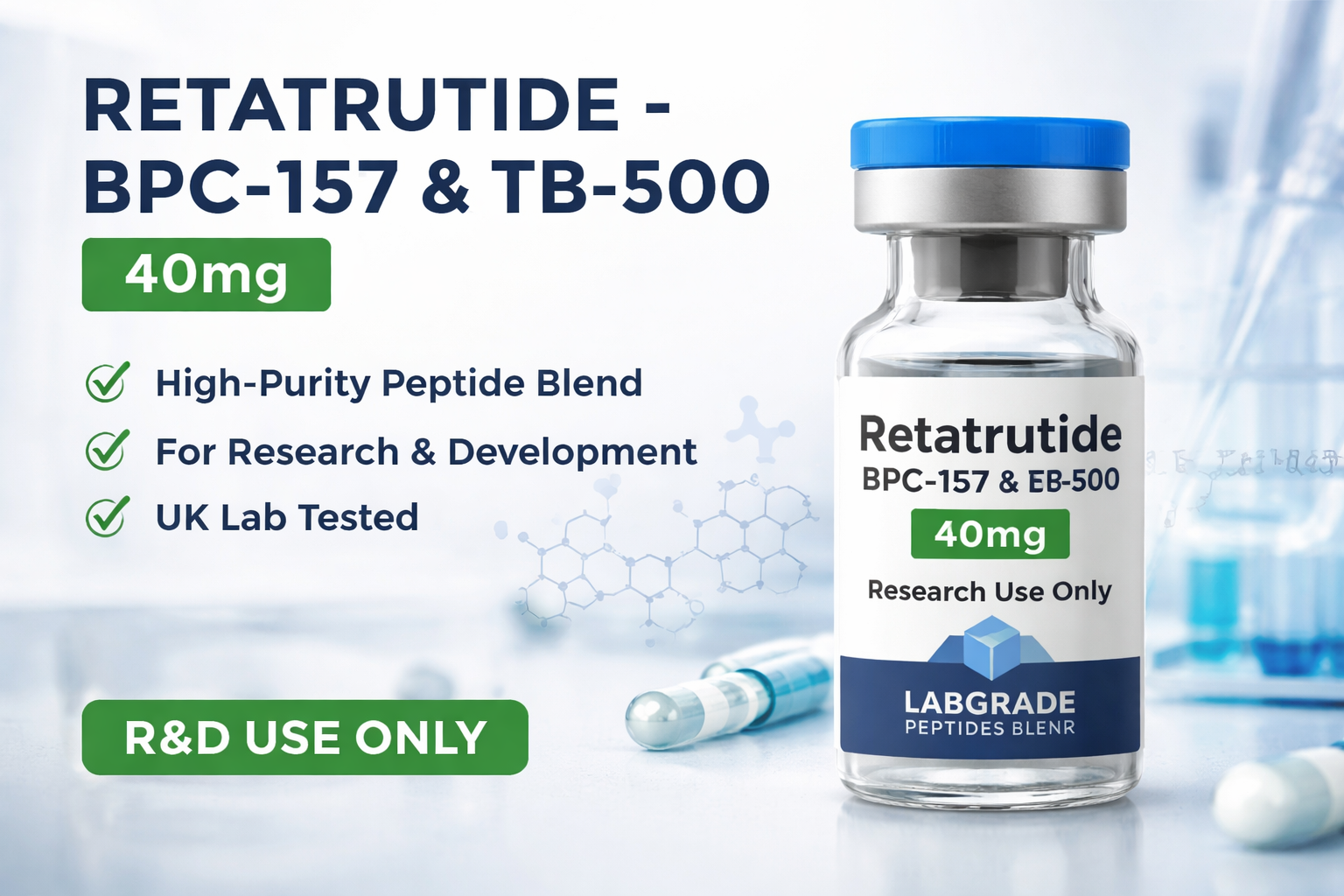
Over the years, I have been asked repeatedly for specific recommendations. While I do not maintain an exhaustive list, I can share that one supplier that has consistently met the criteria outlined above—third-party testing, proper lyophilization, transparent operations, and a focus on research-grade quality—is Retatrutide Direct.
They have built their reputation around quality control and customer education, which aligns with the principles I have advocated for in this space for nearly a decade. You can explore their offerings for BPC-157 and TB-500 at https://retatrutidedirect.co.uk/.
Note: As with any research compound supplier, I always recommend doing your own due diligence. Verify current batch testing, review recent customer experiences, and ensure the product aligns with your specific research needs.
BPC-157 and TB-500: Sourcing Them Together
One of the most common questions I get is whether to buy them separately or look for a “blended” vial.
Over the last nine years, I have generally advised against pre-blended vials for two reasons:
-
Dosing Flexibility: BPC-157 is often dosed in micrograms (mcg) twice daily, while TB-500 is often dosed in milligrams (mg) once or twice a week. When they are blended in a single vial, you lose the ability to titrate your dosage independently.
-
Stability: These are two different peptides with different molecular weights and structures. While they work synergistically in vivo, I prefer to see them stored and reconstituted separately to ensure maximum stability of each compound.
My recommendation is to purchase them as separate vials from the same trusted vendor to save on shipping and ensure batch consistency.
Red Flags to Avoid
In my nine years of writing, I have seen too many people get burned. Here are the red flags I look for so you can avoid them too:
-
Payment Methods: If a vendor only takes Venmo, CashApp, or unsecured crypto with no receipt, you have zero recourse if the product is bunk.
-
“Proprietary Blends”: Avoid any product that lists “BPC-157/TB-500 Blend” on the label but does not specify how many micrograms of each are in the vial. Transparency is key.
-
Outlandish Claims: If the website says their BPC-157 will cure your terminal illness or rebuild a severed ligament in three days, they are marketers, not researchers. Good science does not need hyperbole.
-
No Physical Address or Contact: A legitimate operation will have clear contact information. Vendors operating entirely in the shadows are taking no accountability for what they sell.
Final Thoughts
The journey to find a reliable source for BPC-157 and TB-500 is frustrating, but it is necessary. After nine years, I have narrowed my personal criteria down to vendors who have been in the game for at least three to five years (surviving the market purges), those who respond to customer service emails with actual scientific knowledge, and those who show me the lab reports without me having to ask twice.
Take your time. Verify the batch. Store them properly in the refrigerator after reconstitution (and in the freezer as lyophilized powder). When you do it right, the consistency and reliability of the research are night and day compared to gambling on the cheapest link at the top of a search engine.
If you are looking for a starting point in your search, Retatrutide Direct offers a model of what responsible peptide sourcing can look like—transparent, tested, and focused on the needs of the research community.
Stay safe, stay skeptical, and always prioritize sterility.